REVIEW · TULUM
Private Kiteboarding Lesson in Tulum
Book on Viator →Operated by Mexican Caribbean Kitesurf · Bookable on Viator
Learning kite control without guesswork feels fast. On this private Tulum session, I love that you start with wind window style kite theory, then you learn setup so you understand what the kite is doing. I also love the private coaching focus, where instructors like Mauricio and Roma can shift the lesson toward your level (even if your partner is starting from zero). The one real drawback: it depends on favorable wind and weather, so the plan can adjust if conditions aren’t right.
You get a clear progression from beach basics to real riding drills: body drag upwind, power strokes, then waterstarts that go from assisted to solo. I especially like that safety is built in early, including bar basics and a self-rescue technique, not just a quick mention. If you have back problems or serious medical conditions, this is not recommended, and you should take that seriously before booking.
In This Review
- Key Takeaways Before You Go
- Private Kiteboarding in Tulum: What Makes It Worth Your Time
- Meeting Point, Duration, and What the 3 Hours Really Does
- Beach Lesson: Kite and Wind Theory That Helps You Stop Guessing
- Safety Systems and Self-Rescue: The Part That Saves Real Trouble
- Into the Water: Body Drag Upwind and Power Strokes
- Waterstart Progression: Assisted, Then Solo
- Riding: Downwind First, Then Upwind, Then Transitions
- Private Coaching That Adapts to You (Even Mid-Session)
- Gear, Bathrooms, Showers, and Paddleboarding Extras
- Price and Value: Why $270 Can Make Sense for a Private Lesson
- Weather and Wind: The Reality You Should Plan For
- Who This Lesson Is Best For (and Who Should Skip It)
- Should You Book This Private Kiteboarding Lesson in Tulum?
- FAQ
- How long is the private kiteboarding lesson in Tulum?
- What is the price per person?
- Is this a private experience or shared with other people?
- What language is the lesson taught in?
- What skills will I learn during the lesson?
- What’s included in the price?
- What is not included?
- What’s the minimum age?
- What if the weather or wind isn’t favorable?
- Where does the lesson start and end?
Key Takeaways Before You Go
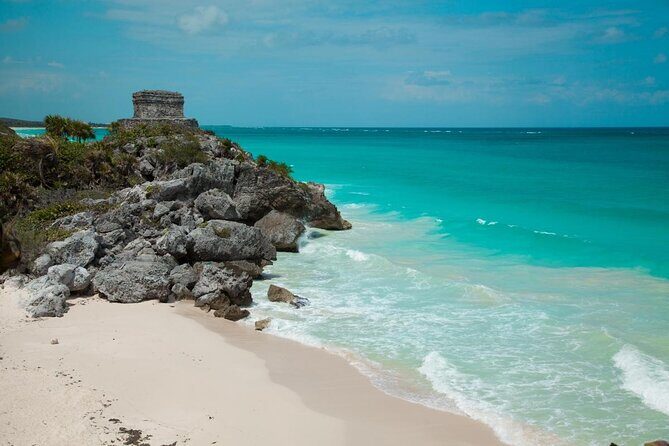
- Wind theory that actually connects to riding (wind window basics and kite control)
- Setup + bar safety + self-rescue practiced before you chase power
- Structured water progression from body drag upwind to transitions
- You ride what you can handle with coaching that adapts to your goals and your partner’s level
- Downwind first, then upwind and transitions so you build control in the right order
- On-site comfort and extras like bathrooms, showers, Wi‑Fi, and paddleboard boards
Private Kiteboarding in Tulum: What Makes It Worth Your Time
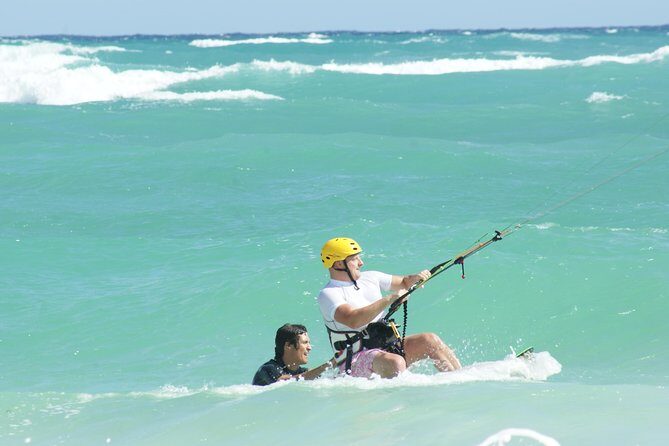
Tulum is a great place to learn because the setup is simple: you’re at the beach, the water is close, and you can go from “this is the kite” to “okay, now move in the water” without long gaps. This private lesson leans hard on fundamentals. That matters because kitesurfing looks magical from shore, but it’s really cause-and-effect: wind, kite position, line tension, and your body position.
The biggest value here is the teaching style. With Mauricio and Roma (both instructors on this kind of lesson), the goal isn’t just getting you up once. It’s getting you progressing in a way that makes sense for your body and your confidence. In real life, that’s what turns a scary sport into something you can actually repeat.
Other surfing and watersports we've reviewed in Tulum
Meeting Point, Duration, and What the 3 Hours Really Does
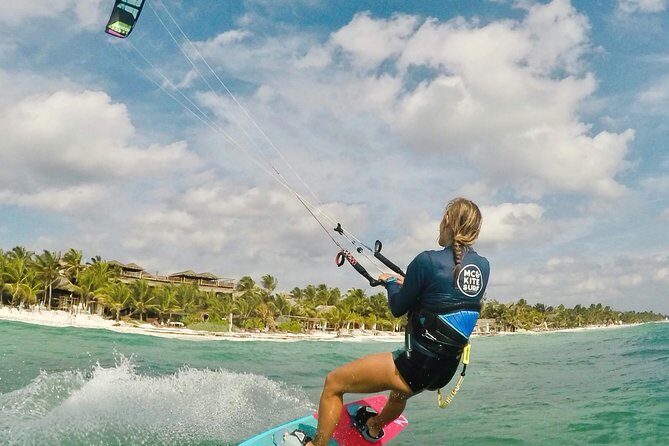
The lesson starts at Ahau Tulum (Carr. Tulum a Boca Paila Km. 7.5, Zona Costera, Tulum Beach, 77760, Q.R., Mexico), and it ends back at the same meeting point. It runs about 3 hours, so you’ll want to treat it like a focused coaching block, not a casual beach hang.
In practice, the time is used for a sequence: learn on land, then test those ideas in the water, then bring it together into short rides and transitions. A 3-hour private session is long enough to feel real progress, but short enough that you’ll likely be leaving with new skills you can practice later rather than “fully mastering everything” in one go.
Beach Lesson: Kite and Wind Theory That Helps You Stop Guessing
Before you step into the water, you work through the core mental model of kitesurfing. This is where you learn to stop guessing and start reading wind and kite behavior.
You begin with kite and wind theory, including concepts like the wind window—basically the area where the kite generates the power you need. That concept matters because most beginners don’t lose control for no reason; they put the kite in a position that creates the wrong kind of pull.
Next comes setup: kite and line arrangement, plus how to prepare to launch with more confidence. Then you get hands-on with the bar’s inner workings and safety systems. Even if you never touch a tool at home, understanding what the bar is doing makes the sport feel less mysterious.
Finally, you practice self-rescue technique. This is not dramatic gym training. It’s a practical method to get back to a safe plan if something goes sideways. Then you move into kite control drills so you can handle the kite’s behavior before you add the board and water.
Safety Systems and Self-Rescue: The Part That Saves Real Trouble
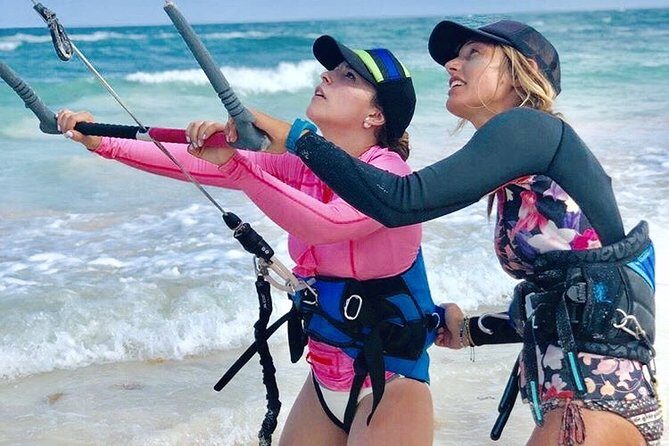
I’m glad this lesson treats safety like a skill, not a warning. The sequence—bar safety systems and a self-rescue technique before you ride—helps you stay calm when you’re learning. If you understand how to depower and recover, you’re less likely to panic mid-situation.
Also, practicing self-rescue in your lesson time gives you a baseline. Instead of hoping you never need it, you learn it once with instruction and correction. That makes it easier to trust your own actions later, even if the wind gets stronger or the chop changes.
Into the Water: Body Drag Upwind and Power Strokes
Once you’re in the water, the lesson shifts from thinking to doing. The first goal is to move your body and kite control together, so you can start traveling rather than just “surviving.”
You’ll begin with body drag upwind. This is a key step because upwind control is the foundation of everything that comes after. If you can’t manage your position relative to the wind direction, riding becomes a series of drift-and-catch moments.
Then you learn power strokes. This is where you start timing your movements with the kite’s pull. Done right, power strokes help you create speed and direction on purpose instead of hoping the kite just does it for you.
Other private tours in Tulum




Waterstart Progression: Assisted, Then Solo
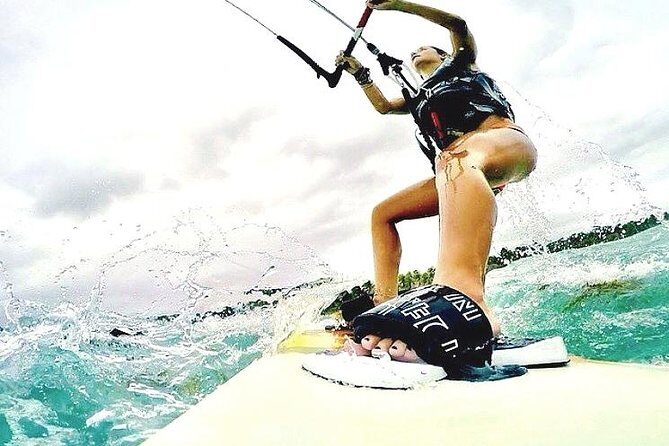
Waterstarting is where most new kiters either find confidence or feel stuck. This lesson uses a smart ramp: you do waterstarts with assistance first, then move to waterstart solo.
Assistance matters because it reduces the number of variables at once. You can focus on the big pieces the coach is watching—kite position, body position, and when to commit. Then, after you’ve had a few solid attempts with feedback, you transition to doing the same concept solo.
This structure is practical because it gives you repeated chances to feel what a successful start is supposed to feel like. You’re not just “trying until you get lucky.”
Riding: Downwind First, Then Upwind, Then Transitions
After the waterstart basics, the lesson moves into riding in a progression that makes sense for skill building.
You start with ride downwind, where the kite can pull you in a more forgiving direction relative to controlling tension. Downwind riding helps you focus on balance and board feel without the added stress of immediately managing your line of travel against the wind.
Next you work toward ride upwind. Upwind riding is harder because it demands more precise kite control and body mechanics. This is where the earlier wind window theory and kite control drills pay off. If you’ve learned where the kite belongs and how to steer it smoothly, upwind starts to feel like a technique rather than a fight.
Then you practice transitions. Transitions are where you connect skills: how to change direction or riding style without losing control. It’s also where you see whether your kite positioning and your body position are truly linked—or if you’re just moving by luck.
Private Coaching That Adapts to You (Even Mid-Session)
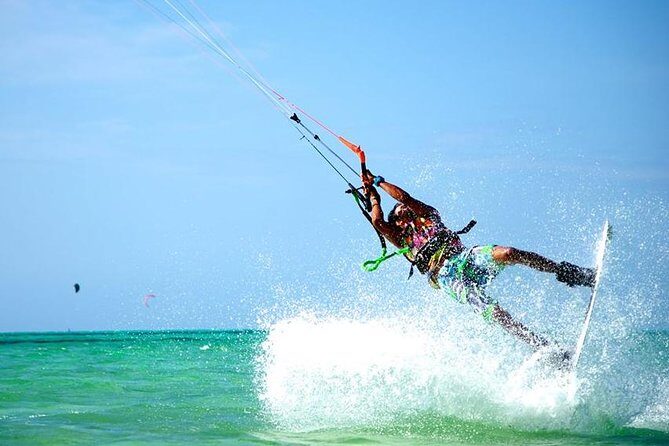
This is a private lesson, so you’re not being held back by someone else’s pace. That’s a big deal in kiteboarding, where wind conditions and learning speed can vary a lot from person to person.
One of the most impressive parts of this experience is how instructors can adjust. Mauricio and Roma are known for staying flexible based on what you want to work on. If you want to focus on kiting tricks, strapless riding, or winging, the coaching can shift. If your partner is a complete beginner, the instructor can still bring you both along without turning the lesson into a one-size-fits-all routine.
That adaptability also shows when wind isn’t cooperating. The lesson isn’t rigid about “you must ride no matter what.” When wind conditions need a change, the coach can adjust the schedule so you keep learning instead of waiting.
Gear, Bathrooms, Showers, and Paddleboarding Extras
You’ll have kiteboarding gear included, plus an IKO-certified instructor. The lesson also includes use of bathrooms, showers, and Wi‑Fi, which sounds minor until you’re trying to stay comfortable after you get wet.
There’s also paddleboarding boards included. That’s useful because it gives you a chance to enjoy the water environment even if part of the session shifts around conditions. It’s a small added value that makes the time feel more like a beach experience, not just a training grind.
What’s not included is transportation and food and drinks, so plan on getting to Ahau Tulum on your own and handling meals separately.
Price and Value: Why $270 Can Make Sense for a Private Lesson
At $270 per person for about 3 hours, this isn’t the cheapest way to “try kitesurfing.” But it’s also not trying to be cheap. You’re paying for private instruction by IKO-certified coaching plus full gear for the session.
The value comes from not having to coordinate rentals, guessing instruction, or piece together learning stages. Instead, you get a coached progression: theory, setup, bar safety, self-rescue, water body drags, power strokes, then starts and controlled rides. That’s a lot of expert attention in a single block of time.
If you’re serious about learning quickly, private coaching is often the best way to avoid “wrong practice.” In kiteboarding, wrong habits are easy to build. This lesson focuses on correct fundamentals early, which can save you time later when you repeat skills.
Weather and Wind: The Reality You Should Plan For
This experience runs only under favorable conditions. If wind is poor, you’re offered an alternative date or a full refund if it has to be canceled due to weather.
That matters for planning your Tulum days. If you’re booking around other activities, give yourself flexibility. Kiteboarding is weather-dependent by nature, and the lesson’s structure assumes you have enough wind to do kite control and riding drills.
Who This Lesson Is Best For (and Who Should Skip It)
This lesson is aimed at all skill levels, with the same private coaching structure designed to match your needs. If you’re brand new, the wind theory, safety systems, and assisted starts are exactly how you should start. If you already ride, the flexible coaching approach can help you target specific skills.
Minimum age is 10 years, and service animals are allowed. You should have a moderate physical fitness level.
It is not recommended for participants with back problems or serious medical conditions, so be honest about your health and choose safety first.
Should You Book This Private Kiteboarding Lesson in Tulum?
Yes, if you want a real learning path with IKO-certified coaching, structured practice, and safety taught early. The biggest reason to book is the way the lesson builds from wind theory and bar safety into water control, then into waterstarts and rides—so you’re not just jumping on a board and hoping.
I’d skip it (or ask extra questions first) if your schedule can’t handle weather changes or if you know you have medical constraints that make this not recommended. Otherwise, for $270 per person, you’re buying focused coaching time, full gear, and a clear progression that helps you feel progress in a single 3-hour session.
FAQ
How long is the private kiteboarding lesson in Tulum?
It’s approximately 3 hours.
What is the price per person?
The price is $270.00 per person.
Is this a private experience or shared with other people?
It’s private. Only your group participates.
What language is the lesson taught in?
The lesson is offered in English.
What skills will I learn during the lesson?
You’ll cover kite and wind theory, kite setup, bar safety systems, self-rescue, kite control, body drag upwind, power strokes, waterstarts (assisted and solo), riding downwind and upwind, and transitions.
What’s included in the price?
Included are an IKO-certified instructor, kiteboarding gear, bathroom and shower access, Wi‑Fi use, and use of paddleboarding boards.
What is not included?
Transportation and food and drinks are not included.
What’s the minimum age?
The minimum age is 10 years.
What if the weather or wind isn’t favorable?
If it’s canceled due to poor weather, you’ll be offered an alternative date or a full refund.
Where does the lesson start and end?
It starts at Ahau Tulum on Carr. Tulum a Boca Paila Km. 7.5 Zona Costera, Tulum Beach, 77760 Tulum, Q.R., Mexico, and ends back at the same meeting point.
More Private Tours in Tulum
More Tour Reviews in Tulum
- Selva Maya Eco Adventure Park: Ziplining, Hanging Bridges, Rappelling and Cenote
★ 5.0 · 1,057 reviews