Snorkeling in caves sounds unreal. This Tulum cenote expedition is built around three different sinkhole styles—open, open-and-cave, then fully cave—so the visuals keep changing instead of feeling repetitive. You’ll also get the backstory of how cenotes formed and why they’re so important on the Yucatán Peninsula, not just a checklist swim.
What I like most is the way this trip turns water time into exploration. You snorkel through the underground connection between the second and third cenotes, traveling via the longest underground river described on this route. The other big win is the guiding: Luis is the kind of host who adds context, keeps you oriented, and even helps with practical stuff like photos if you don’t have an underwater camera.
One thing to consider: the tour runs in a daytime window. Pickup is scheduled between 9:00 AM and 2:00 PM, so if you want a later start, you’ll need to plan your Tulum day accordingly.
In This Review
- Key Things That Make This Cenote Snorkeling Special
- Three Cenotes, One Continuation: What You’re Really Doing
- Your Route: Casa Cenote, Then Sac Actun, Then the Cave System
- Stop 1: Casa Cenote (the open start)
- Stop 2: Open-and-cave transition (where it starts to feel otherworldly)
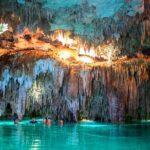
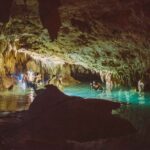
- Stop 3: The cave system (stalactites, stalagmites, and the underground river feel)
- Gear, Swimming Comfort, and What to Bring for a Smooth 4 Hours
- Bring these basics
- Wildlife Encounters: Cables, Calm, and Quiet Respect
- Luis and the Story Behind the Sinkholes
- A practical bonus: photo help
- Ask about food in Tulum
- Price and Value: Is $148.87 Worth It?
- Timing and Logistics: How to Fit the 9:00 AM to 2:00 PM Window
- Why time window matters
- Who This Tour Fits Best (and Who Should Rethink It)
- Should You Book This Cenote Snorkeling Expedition?
- FAQ
- How long is the cenote snorkeling tour?
- Is hotel pickup included?
- Is this tour private?
- What cenotes are visited?
- Do you snorkel more than one cenote?
- Is the tour offered in English?
- What’s the schedule for the tour?
- What’s the cancellation policy?
- Is snorkel equipment provided?
Key Things That Make This Cenote Snorkeling Special
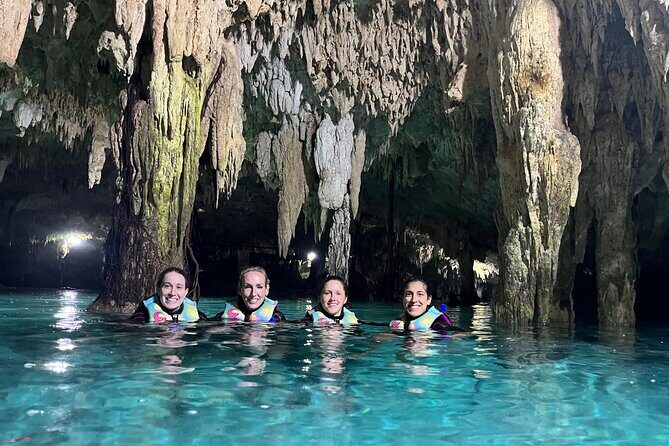
- Three cenotes with three moods: open sky light, then mixed cave-open zones, then full cave scenery
- Sac Actun-style underwater route: you snorkel from the second cenote to the third through an underground river connection
- Wildlife you might actually notice: fish and blue crabs in the open section; birds and a sunning crocodile are possible
- Cave features worth slowing down for: stalagmites/stalactites, columns, and even bats in the cave system
- Luis as your translator of place: he focuses on Mayan culture, Mexican history, and what you’re seeing underwater
Three Cenotes, One Continuation: What You’re Really Doing
This isn’t a hit-and-run swim at one cenote. The charm here is the progression: you start in an open cenote (brighter, more animal-life energy), then move into a more complex area where you’re transitioning from daylight into cave reality. By the time you reach the cave system, you’re experiencing a different kind of world—same water, very different atmosphere.
The route also makes the snorkeling time feel purposeful. Instead of just floating around until you’re ready to leave, you follow a sequence where the second cenote sets up what you’ll see next. And because you snorkel from the second to the third through the underground river connection, the tour has a narrative arc you can feel.
Other cenote tours we've reviewed in Tulum

Your Route: Casa Cenote, Then Sac Actun, Then the Cave System
Stop 1: Casa Cenote (the open start)
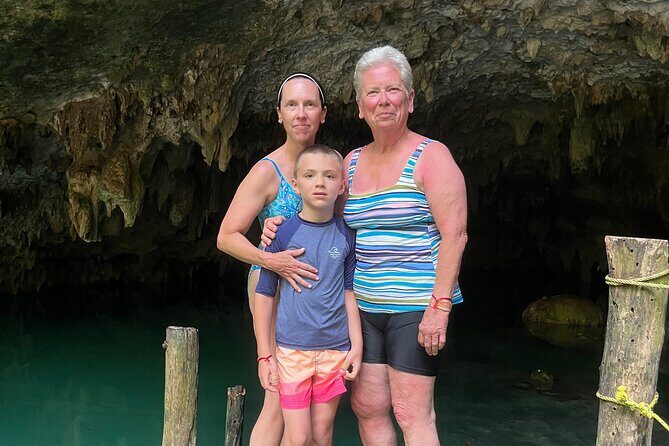
Casa Cenote gives you the “look up and breathe” version of cenote snorkeling. In the open water, you’ll have a better chance of spotting activity near the surface—fish, blue crabs, and birds are all things people describe seeing here. There’s also a chance you’ll notice a resident crocodile sunning on the rocks while you float nearby.
That crocodile detail matters, even if you’re a confident swimmer. The approach is to keep distance and respect space. One of the reasons this tour gets high marks is how Luis helps you get the vibe right—he explains behavior and sets expectations so you don’t panic when you spot wildlife.
Possible drawback at Casa: since it’s the open section, you may see more movement (and more people at some times in general). A private group helps because you’re not forced to keep pace with a crowd.
Stop 2: Open-and-cave transition (where it starts to feel otherworldly)
The middle stop is where the scenery starts to shift. People describe this section as mixing open cave characteristics—fresh, clean water with visible rock formations and the kind of depth where you start looking at the ceiling.
This is also where the tour builds toward the signature moment: moving from the second cenote into the third by snorkeling through the underground river connection. If you like “one continuous experience” rather than three separate check-ins, this is the part that clicks.
Stop 3: The cave system (stalactites, stalagmites, and the underground river feel)
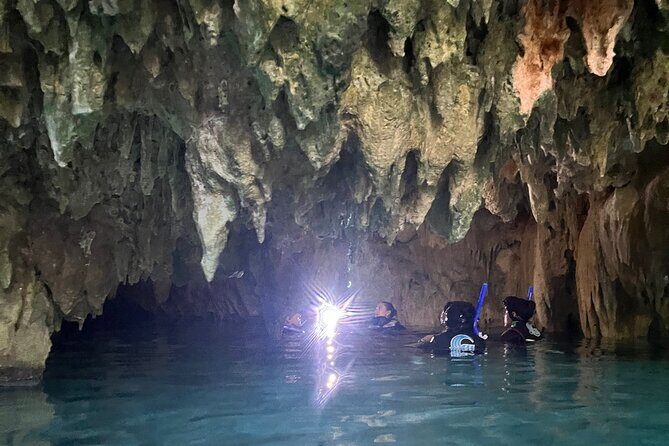
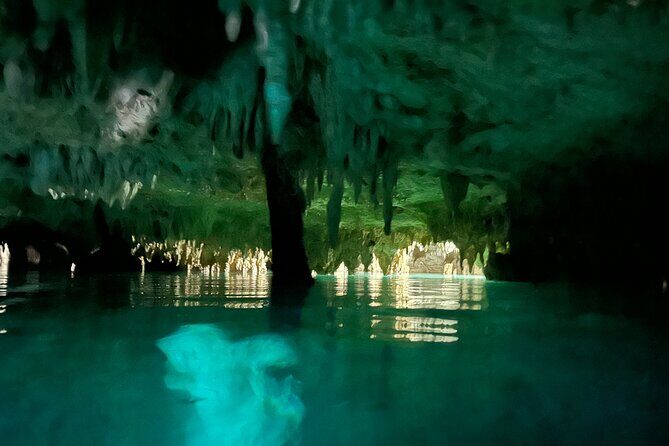
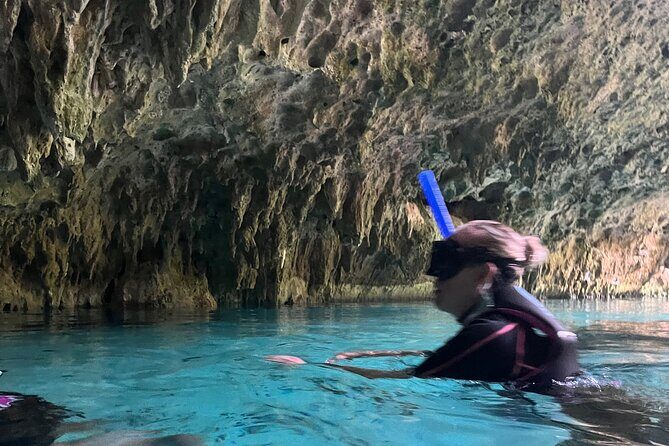
The final cenote is the cave-heavy experience, the one people remember when they think of “cenotes” as a place that feels carved by time. Descriptions of this area include cave formations like stalactites and stalagmites, plus columns and natural rock structures in the water. Bats are also mentioned as part of what you might see in the cave environment.
And the underground river connection is a big deal in this tour’s concept. The information provided highlights it as the longest underground river, and also describes the cave system as the biggest in the American continent. Even if you don’t measure those titles in your head, it explains why the route is designed the way it is: you’re not just snorkeling in a pocket—you’re following a connected underground path.
Other snorkeling tours we've reviewed in Tulum


Gear, Swimming Comfort, and What to Bring for a Smooth 4 Hours
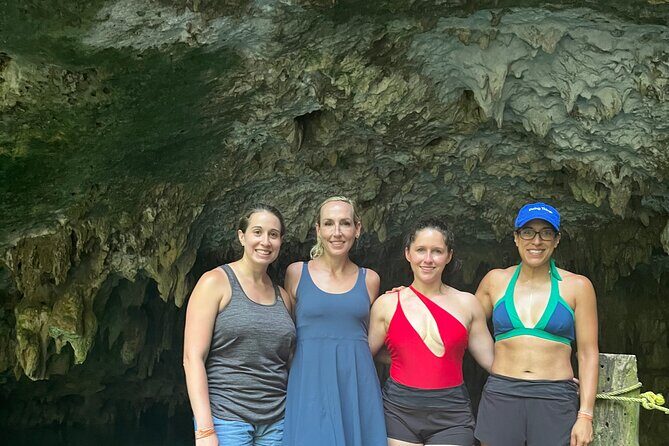
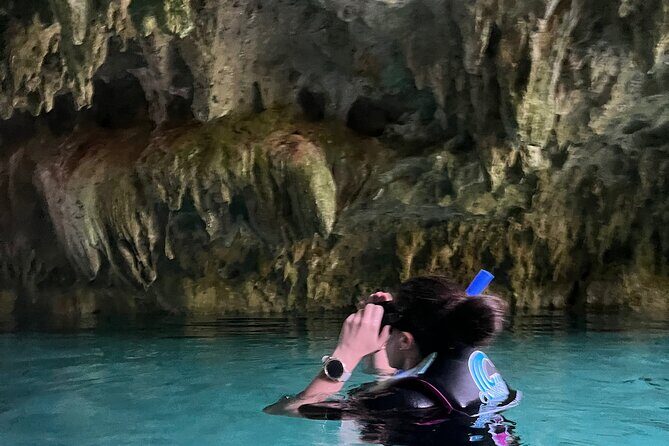
The tour includes snorkel equipment, which is a practical value. You don’t want to burn vacation time figuring out gear or hauling your own kit through a humid afternoon. This setup also matters because the tour’s total time is about 4 hours, so you’ll be happier if you’re not spending that window doing extra prep.
That said, snorkel tours still depend on you being comfortable with:
- wearing snorkel gear for a sustained stretch
- floating and controlling your breathing
- entering and leaving the water safely and calmly
Most people can participate, but if you’re anxious in enclosed spaces, remember you are doing a cave portion. You’ll get more enjoyment if you can stay calm and move slowly when the scenery turns darker and more “underground.”
Bring these basics
You don’t need to overpack, but you should plan for wet conditions. A change of clothes and a small dry bag mindset help a lot. If you have your own underwater camera, great. If you don’t, that’s where Luis’s help can be a real bonus—he’s known for taking pictures for people who don’t have an underwater camera.
Wildlife Encounters: Cables, Calm, and Quiet Respect
One reason this tour stands out is how it handles the wildlife side without turning it into chaos. In the open cenote, people mention fish and blue crabs, birds in the general area, and the possibility of a crocodile sunning on rocks. That’s a lot for one stop—but the tone stays respectful.
Luis’s guidance is key. He explains how the crocodile relates to its environment—such as eating fish and being nocturnal—so you understand what you’re seeing rather than guessing. The practical result is simple: you keep a calm presence and avoid crowding the wildlife.
In the cave system, the wildlife angle shifts. Instead of crabs and birds, you might notice bats and the cave formations that attract attention as you drift under the rock. This is less about “watching animals” and more about watching the environment work like a living space.
Luis and the Story Behind the Sinkholes
A good cenote tour does two things: it gets you wet and it gives you a reason to care. This one leans hard into the second part, with Luis providing history and interpretation of what you’re seeing.
From the information shared, Luis talks about:
- Mayan culture and how cenotes fit into the region
- Mexican history in a way that connects to the landscape
- the cenotes’ formation—how they formed and when they were formed
Even if you’ve read about cenotes before, a guide-led explanation changes your experience. You start noticing patterns: water clarity, rock textures, and how each cenote type creates a different visual “scene.” The tour doesn’t just say “look at this.” It helps you understand why it looks that way.
A practical bonus: photo help
If you don’t bring an underwater camera, ask Luis to help with pictures. The idea isn’t to turn the tour into a photo shoot, but it’s a nice safety net for people who want memories without buying extra gear.
Ask about food in Tulum
One small but useful tip: if you want local food suggestions, Luis can help. That matters because it’s often the meal plan that makes or breaks the day after a snorkeling outing.
Price and Value: Is $148.87 Worth It?
At $148.87 per person for a roughly 4-hour private experience, the value depends on what you compare it to.
Here’s how I’d judge it:
- You’re paying for three cenotes, not one. That reduces the “single-location fee” problem.
- You’re getting the underground snorkeling connection, not just a single scenic float.
- You’re getting a guide who adds history and practical reassurance around wildlife.
- You’re not sharing the experience with strangers, since it’s private—so the pace can match your group.
That private format is a sneaky value driver. In snorkeling, comfort matters. If your group moves at your pace, you spend less energy waiting and more time enjoying what you came for.
Also, if you’re going solo, the route has been described as one of the better options for a solo arrangement. That’s worth noting because some tours inflate solo pricing or force you into awkward group sizes.
Potential cost consideration: private tours can be pricey versus shared group tours. If you’re traveling with friends who also want cenotes, it often becomes much more reasonable per person.
Timing and Logistics: How to Fit the 9:00 AM to 2:00 PM Window
The schedule is straightforward but strict. The tour operates during 9:00 AM–2:00 PM within the season window listed, and it runs Monday through Sunday. That means you’ll want to plan your Tulum day around the tour rather than trying to squeeze it in late.
Pickup is offered, and you’re picked up at the location you agree on. The tour also uses a mobile ticket, which is convenient if you don’t want paper tickets in wet pockets.
Why time window matters
Cenotes feel different depending on the light and the day’s rhythm. The open-water first stop is much nicer when everyone is fresh and the day is still moving calmly. A midday slot can work, but if you’re hoping for a more relaxed feel, try to book near the start of the window.
Who This Tour Fits Best (and Who Should Rethink It)
This tour is a strong match if you:
- want variety: open cenote, mixed open/cave, then true cave
- enjoy guided explanation, not just snorkeling time
- like the idea of snorkeling through an underground river connection
- care about a private pace and smaller-group comfort
It may be less ideal if you:
- don’t feel comfortable in cave environments (even if it’s described as safe and manageable)
- need a very long, unstructured snorkeling float time—this one is built as a curated route
- prefer late-day activities, since the tour window closes at 2:00 PM
Should You Book This Cenote Snorkeling Expedition?
If your goal is one standout cenote day in Tulum, I think this is the kind of tour that earns its price. You’re not settling for a single stop. You’re getting a full progression—from Casa Cenote into the connected cave system—plus Luis’s storytelling that turns the water into context.
Book it if you want:
- an organized route with a guide who explains what you’re seeing
- the chance to spot wildlife in the open section while staying calm
- cave scenery that includes formations and the feeling of being in an underground world
Skip it only if your schedule can’t handle the 9:00 AM–2:00 PM window, or if snorkeling in enclosed cave sections makes you uneasy.
FAQ
How long is the cenote snorkeling tour?
It runs for about 4 hours.
Is hotel pickup included?
Yes. Pickup is offered, and you’ll be picked up at your agreed location.
Is this tour private?
Yes. It’s private, and only your group participates.
What cenotes are visited?
The tour visits three cenotes in the Yucatán Peninsula area: one open, one open-and-cave, and one cave.
Do you snorkel more than one cenote?
Yes. From the second cenote, you snorkel to the third through the underground river connection.
Is the tour offered in English?
Yes, it’s offered in English.
What’s the schedule for the tour?
The tour runs Monday through Sunday from 9:00 AM to 2:00 PM.
What’s the cancellation policy?
You can cancel for a full refund if you cancel at least 24 hours in advance. If you cancel less than 24 hours before the start time, you won’t get a refund.
Is snorkel equipment provided?
Yes. Snorkel equipment is provided as part of the experience.
More Tour Reviews in Tulum
- Selva Maya Eco Adventure Park: Ziplining, Hanging Bridges, Rappelling and Cenote
★ 5.0 · 1,057 reviews

More Snorkeling Tours in Tulum
More Cenote Tours in Tulum
- Selva Maya Eco Adventure Park: Ziplining, Hanging Bridges, Rappelling and Cenote
★ 5.0 · 1,057 reviews