REVIEW · TULUM
Tulum : Dos Ojos cenote 2 scuba dives (certified divers)
Book on GetYourGuide →Operated by La Calypso Dive Center · Bookable on GetYourGuide
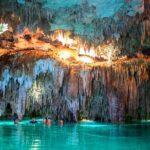
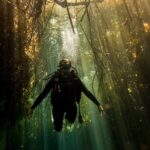
Turquoise water, then a cathedral underwater. This is what makes Dos Ojos so special: you get two separate underwater experiences in one half-day, inside limestone caverns where natural light still reaches you.
What I love is how the tour is set up to feel controlled and comfortable: you go with an instructor, proper gear, and structured time underwater. I also like that you do two different 40-minute sessions at Dos Ojos, instead of squeezing everything into one run.
One thing to plan for: you’ll carry your tanks down about 15 stairs to reach the water. If mobility is an issue for you, that’s the main consideration.
In This Review
- Key Things To Know Before You Go
- Dos Ojos Cenote: Why the Water Looks Unreal
- La Calypso Setup and the Small-Group Feel
- Your 5.5 Hours: Two 40-Minute Underwater Sessions
- Gear, Wetsuit, and the Reality of Carrying Tanks
- Who This Is For (and Who Should Skip It)
- Safety Approach: Structured, Spacious, and Light-Helpful
- Price and Value: What You’re Paying For at $199
- Meet the Guides: Ruby and Marcos
- Practical Tips for Photos and Enjoying the Cavern
- Should You Book This Dos Ojos Two-Session Package?
- FAQ
- Do I need scuba certification for this tour?
- How long is the total experience?
- What is the schedule once you arrive at Dos Ojos?
- How many people are in the group?
- What’s included, and what do I need to bring?
- Is it difficult to get to the water?
Key Things To Know Before You Go
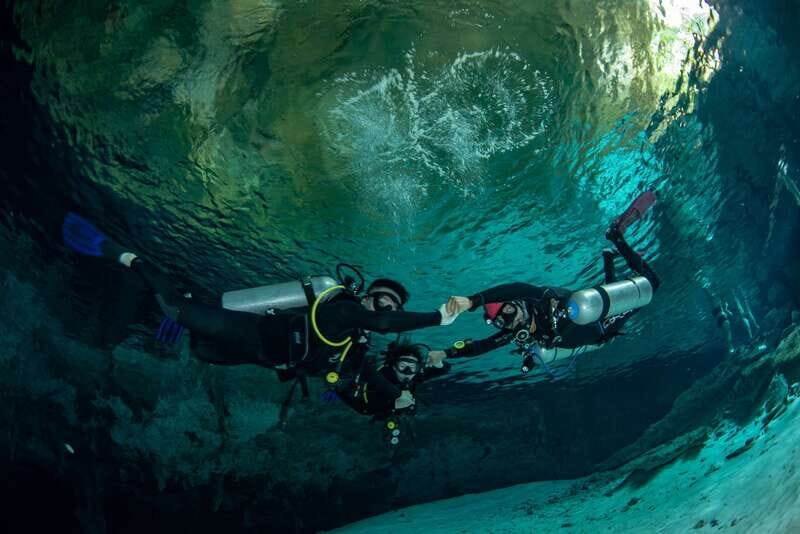
- Two 40-minute sessions in Dos Ojos, with a 15-minute break in between
- Certified instruction and tight safety controls, including space to move and guidance near exits
- Lights and a 5mm wetsuit provided, plus scuba equipment and an instructor
- Small group size (up to 4 people), so you’re not fighting for attention
- Permanent natural light contact while you’re underwater, even in cavern sections
- You might see limestone formations, fossils, prehistoric bone formations, and the halocline depending on conditions
Dos Ojos Cenote: Why the Water Looks Unreal
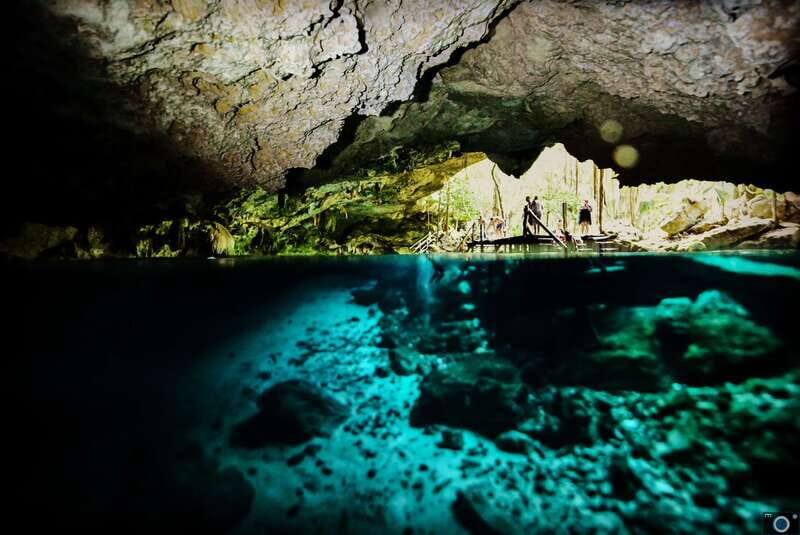
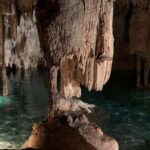
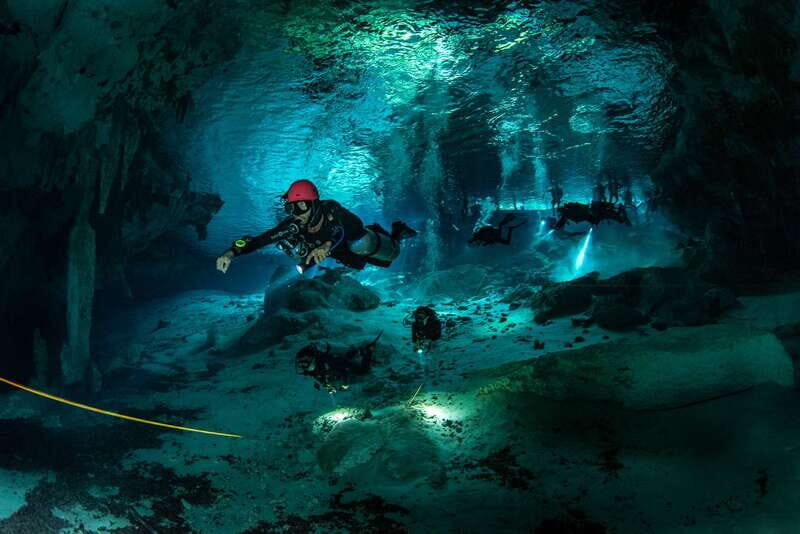
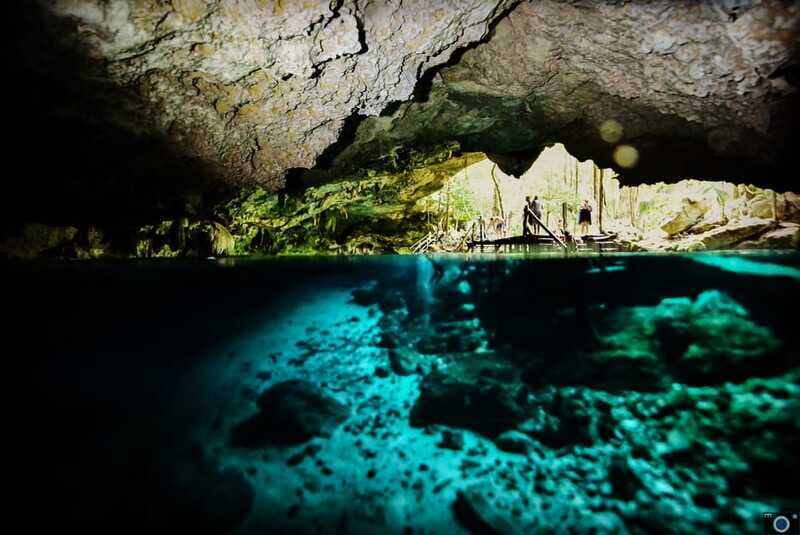
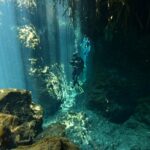
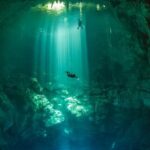
Dos Ojos is famous for a reason. When you reach the entrance, the color can look almost unreal, and once you’re inside the cavern, visibility tends to stay crisp. You’re not just looking at a pretty sinkhole pool. You’re moving through a world of stalactites and stalagmites that form “cathedral” shapes above and below you.
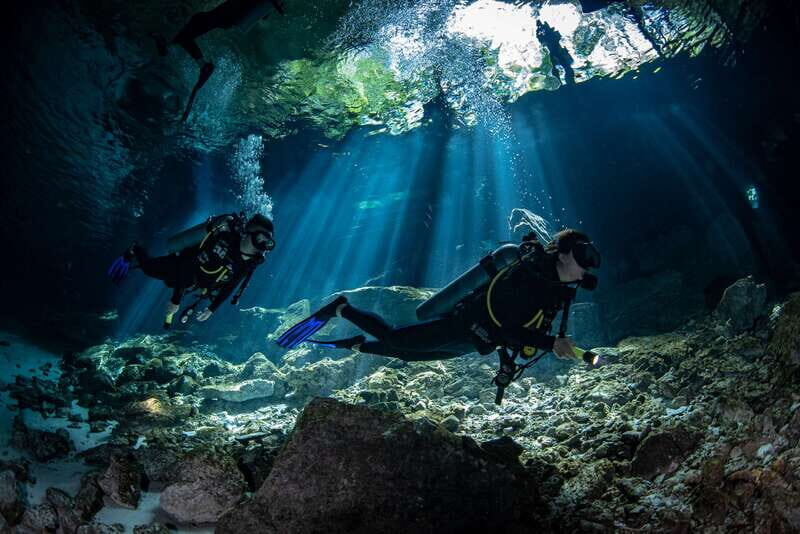
One of the coolest parts is that you get natural light during the underwater time. Even in the cavern sections, you’re not in a totally dark void. That matters for two reasons: it helps you orient yourself, and it makes the formations feel more alive as you glide past them.
Depending on the day and where you spend time within the system, you may also spot details like limestone formations, fossils, and even prehistoric bone formations mentioned as possible observations. You can also encounter native animal species and the halocline—that “layering” effect where water characteristics shift. If you’re a photo person, this can create dramatic visual changes as your viewpoint moves through the water.
Other cenote tours we've reviewed in Tulum

La Calypso Setup and the Small-Group Feel
You start at the La Calypso area in Tulum. The meeting spot is a small cabin in a wide tropical garden with a stone wall. GPS coordinates are 20.212396, -87.462935. If you’re approaching from the north, turn right at the traffic light in front of Pollos El Pechugon and Kahlua bar. Then look for the corner at 2nd street on your right.
This matters because cenote days can start with a bit of confusion if your meeting point is vague. Here, the location is specific, and the tour keeps things organized enough that you can focus on getting ready instead of hunting around.
The other big advantage is the group size. This is limited to 4 participants, which changes the whole feel. You get more personal attention, more space in the water, and less waiting around between steps.
Also, the instructor team supports French, Spanish, and English, so you’re less likely to be stuck translating underwater cues into your best guess.
Your 5.5 Hours: Two 40-Minute Underwater Sessions
This experience is planned to fit neatly into a half-day, running about 5.5 hours total. You do two separate 40-minute underwater sessions at Dos Ojos, with a 15-minute break in between.
Here’s how the timing typically works:
- Meet and get set up at La Calypso.
- Go to Cenote Dos Ojos and get ready for the first underwater session (40 minutes).
- Break for about 15 minutes so you can reset.
- Second underwater session at Dos Ojos (40 minutes).
- Return to La Calypso when you’re done.
Why the two-session format is worth it: one longer time can feel like a checklist. Two sessions give you a chance to settle in, focus on what you’re seeing, then come back fresh for a second run. It’s also easier to handle mentally when you know there’s a clear reset halfway through.
One detail that makes the experience smoother is the tour’s approach to comfort and control in the water. You’re guided with safety in mind, with ample space, close proximity to exit points, and numerous air holes. You’re also kept in a setup where you maintain visual contact with natural light.
Gear, Wetsuit, and the Reality of Carrying Tanks
You’re provided with the SCUBA equipment plus an instructor. The setup includes lights and a 5mm wetsuit, which is a big help because cenote water can feel colder than you expect—especially if you’re coming from bright heat outside.
What you’ll want to bring:
- Swimwear (you’ll likely change on site)
- Your scuba certification
The part that surprises many people isn’t the gear. It’s the stairs. You’ll need to use stairs down to the cenote and carry your tanks. The count given is 15 steps. That’s short, but it’s not “casual.” If you’re traveling with light mobility or you’re carrying extra awkward items, plan to keep it simple.
Practical tip: wear footwear you don’t mind getting damp or gritty around a cenote entrance area. You want to keep your setup calm and predictable before you’re also managing tank straps and gear.
Who This Is For (and Who Should Skip It)
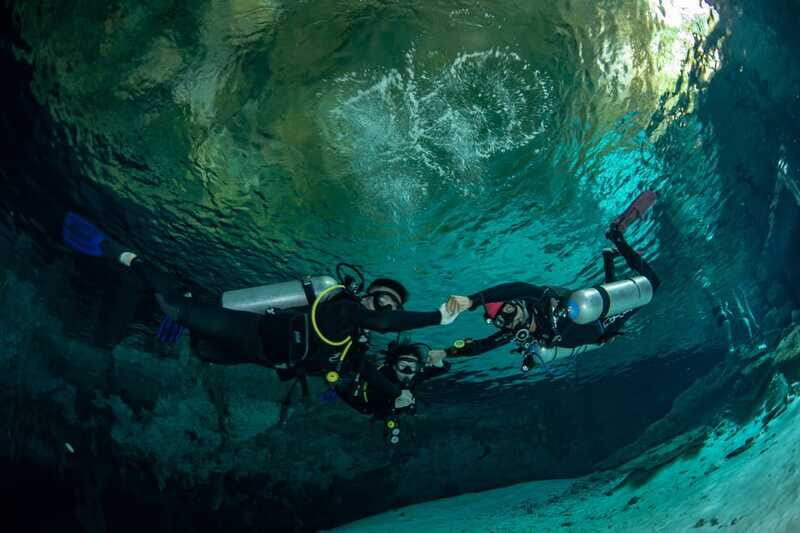
This is not a casual try-it experience. It’s designed for certified scuba participants, and it’s guided with strong emphasis on security.
Here’s who should consider booking:
- Adults who are certified and comfortable following instruction underwater
- People who can handle a short set of stairs while carrying tanks
- Those who want two separate underwater sessions in one half-day
Here’s who should not book:
- Children under 15
- Pregnant women
- People over 70
- Non-swimmers
- People with respiratory issues
- People with pre-existing medical conditions
- Anyone without certification
That list might look strict, but it’s exactly the kind of clarity that keeps cenote travel from turning into guesswork. If you’re on the edge health-wise, it’s worth asking your doctor before you go. If you’re new to scuba, you’ll want a different type of instruction before you try a structured cavern environment.
Also note: while the activity says cenote scuba is accessible starting at level 1 / Open Water, this specific tour still clearly requires you to be certified.
Other Dos Ojos and cenote diving experiences we've reviewed

Safety Approach: Structured, Spacious, and Light-Helpful
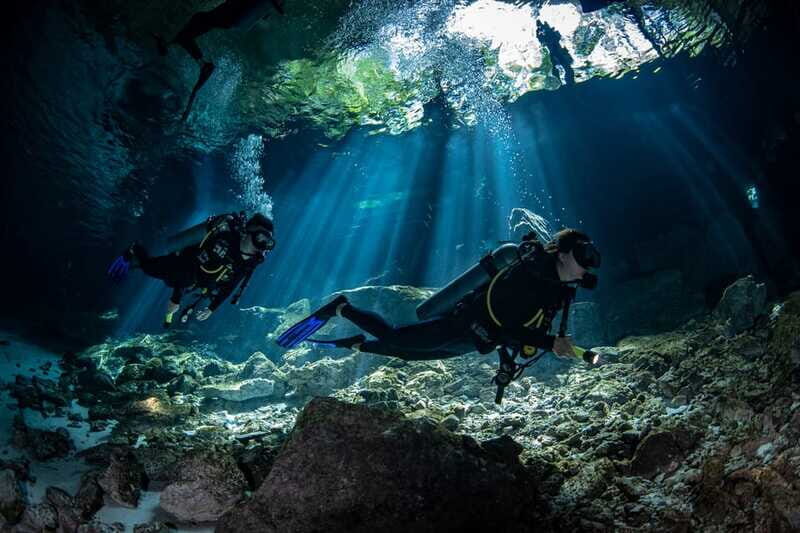
You’re going into a cavern system where conditions require skill and planning. The good news is the tour is built around control.
What the experience emphasizes:
- High safety standards
- Enough space for participants to move without crowding
- Guidance near exit points
- Numerous air holes
- Permanent visual contact with natural light
- Instructor-led support at every stage
That combination is important. Lighting in cenotes isn’t just about aesthetics. It’s about orientation and confidence. When you can still see natural light cues, you can understand where you are in relation to open areas and exit routes.
You’ll also get lights with your gear, which helps you bring out textures in the rock and formations. Stalactites, stalagmites, and limestone walls can look very different depending on how you angle your light. If you’ve got good buoyancy skills, you’ll be able to “hover and browse,” not just rush past.
Price and Value: What You’re Paying For at $199
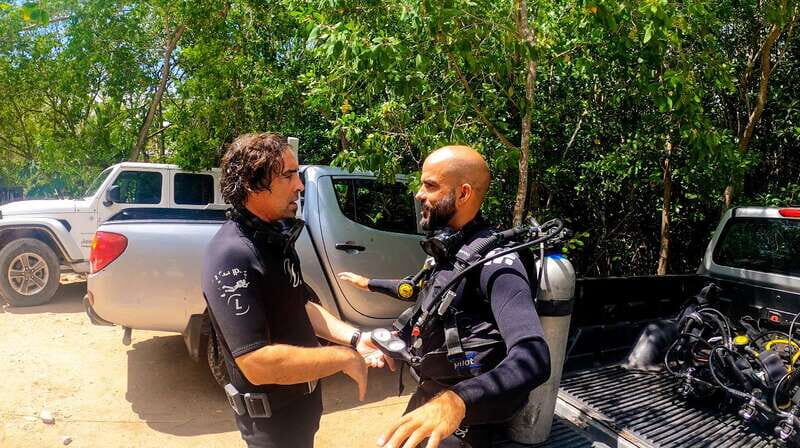
At $199 per person, this is priced like a small, guided technical-style experience, not like a casual sightseeing boat trip.
Here’s the value breakdown in plain terms:
- Round-trip transportation from the dive center area to the cenotes
- SCUBA equipment provided
- Instructor support
- Two underwater sessions at Dos Ojos in a single half-day
- Small-group format, limited to 4 participants
If you compare it to the cost of separately arranging transport, renting scuba gear, and hiring an instructor, the package format becomes easier to justify. You’re not just paying for “time underwater.” You’re paying for the gear, the supervision, the safety planning, and the scheduling that makes two sessions possible without turning the day into chaos.
Also, the group size affects value. With fewer people, you’re more likely to get real attention, smoother spacing in the cavern, and less waiting around.
Meet the Guides: Ruby and Marcos
In an experience like this, the instructor’s personality matters because you’re taking cues constantly while you’re underwater.
Two guide names you may run into are:
- Ruby: described as accommodating, funny, and personable. He’s also known for giving practical local suggestions, including pointing people toward a great taco spot.
- Marcos: described as informative about the cenotes, which is useful if you want more meaning behind what you’re seeing rather than just following hand signals.
Regardless of who you get, the key is that the instruction is structured and safety-focused, and you’re not left guessing. With a small group, your instructor can keep an eye on your positioning and comfort, which makes a big difference when you’re working around cavern features.
Practical Tips for Photos and Enjoying the Cavern
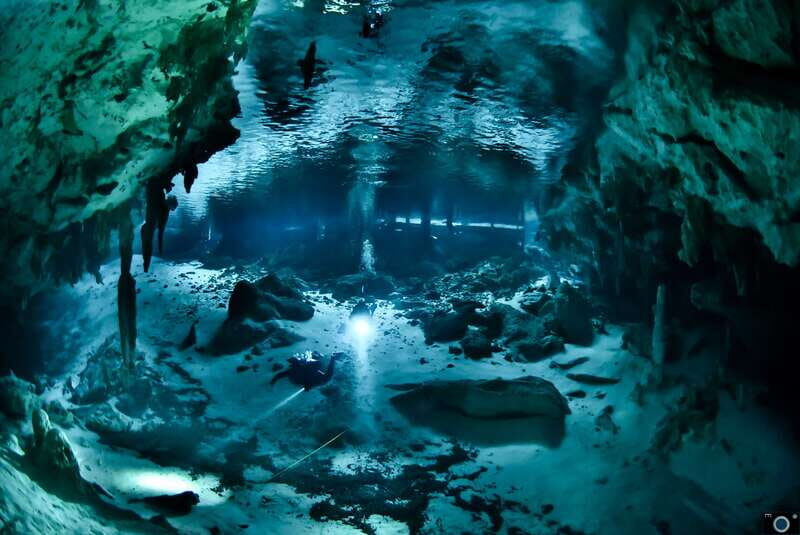
You’re in clear water, inside stone architecture, with lights and natural light mixing. That’s perfect for photos, but it’s also easy to burn time trying to “get the perfect shot.”
A better plan:
- Keep your eyes on your buoyancy and your spacing first.
- Use your light to bring out textures in the rock rather than chasing every bright spot.
- Expect the cavern to look different as you move. Stalactites and stalagmites can frame your view like a living ceiling.
Also, remember the halocline possibility. If you notice a change in how the water looks, don’t panic. Just treat it like part of the environment and keep following guidance. Those visual shifts can actually enhance your photos if you stay relaxed.
Finally, pack a realistic expectation: you’re not touring a museum. You’re moving through a natural system where your path, timing, and visibility can shift slightly based on conditions.
Should You Book This Dos Ojos Two-Session Package?
Book it if:
- You’re certified and comfortable with structured instruction
- You want the classic Dos Ojos experience with two separate underwater sessions
- You prefer a small group (up to 4) and a safety-forward setup
- You’d enjoy seeing cavern formations where natural light still matters
Skip it if:
- The stairs and carrying tanks sound like a problem
- You have any of the listed health limitations, or you’re not a confident swimmer
- You’re looking for a first-time, hands-off experience without certification requirements
If you’re a scuba participant who likes real places more than staged attractions, this is a solid way to spend half a day: two chances to see the cavern world, guided carefully, with gear and transport handled for you. It’s the kind of Tulum experience that leaves you with photos, memories, and stories that actually make sense when you tell them later.
FAQ
Do I need scuba certification for this tour?
Yes. The tour specifies that it is for certified scuba participants, and it is not suitable for people without certification.
How long is the total experience?
The duration is about 5.5 hours total.
What is the schedule once you arrive at Dos Ojos?
You’ll have two underwater sessions at Cenote Dos Ojos, each lasting about 40 minutes, with a 15-minute break between them.
How many people are in the group?
This tour is limited to a small group of up to 4 participants.
What’s included, and what do I need to bring?
Included: round-trip transportation, SCUBA equipment, and an instructor. You need to bring swimwear and your scuba certification.
Is it difficult to get to the water?
You’ll use stairs down to the cenote carrying your tanks, about 15 steps.

More Scuba Diving Tours in Tulum
More Dos Ojos & Cenote Diving
More Cenote Tours in Tulum
- Selva Maya Eco Adventure Park: Ziplining, Hanging Bridges, Rappelling and Cenote
★ 5.0 · 1,057 reviews