REVIEW · TULUM
Group Kiteboarding Lesson in Tulum
Book on Viator →Operated by Mexican Caribbean Kitesurf · Bookable on Viator
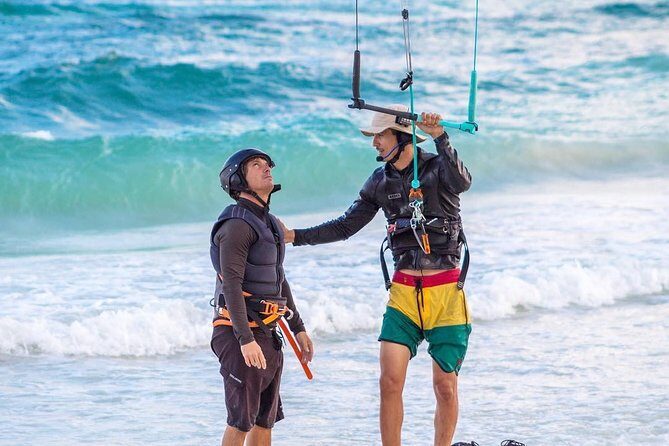
Tulum’s wind school is surprisingly structured. You start on the beach with wind window kite theory and safety, taught by IKO-certified instructors.
I especially like the way the lesson builds from setup to control, not just thrilling riding. You’ll work with a tiny group—two customers per instructor—so feedback doesn’t get lost.
One thing to plan for: kiteboarding depends on wind. Your session timing can shift, and the team may move to El Cuyo if conditions are better.
In This Review
- Key Things to Know Before You Go
- First Gear at Ahau Tulum: how your 3 hours are set up
- Sand Training: kite theory, setup basics, safety systems, self-rescue
- Into the Water: body drag upwind and power strokes
- The riding drills that build real skills: downwind, upwind, transitions
- Wind-first coaching in Tulum (and why El Cuyo shows up)
- Price and value: what $150 gets you (and what it doesn’t)
- Group format: private in feel, small in reality
- Coaches and teaching style: motivation plus technique
- Comfort and smart planning: wind timing, age limits, and fitness
- Who should book this Tulum kiteboarding lesson?
- Should you book Mexican Caribbean Kitesurf in Tulum?
- FAQ
- How many people are in the kite lesson?
- Is this lesson private?
- What’s the duration of the experience?
- What’s included in the price?
- What’s not included?
- Where do we meet in Tulum?
- What happens if weather conditions are poor?
Key Things to Know Before You Go
- Small-group coaching (2 students + 1 instructor) keeps learning hands-on and faster.
- Full safety focus on the bar and systems means you get the how and why, not just the what.
- Self-rescue technique on the sand gives you a repeatable plan if things go wrong.
- Waterstart practice starts assisted, then goes solo so you build confidence step by step.
- Downwind and upwind riding drills help you understand direction and power, not just stand on the board.
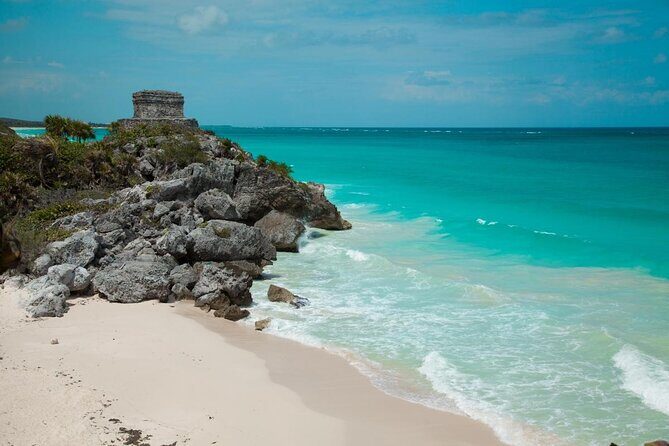
- Wind flexibility is part of the deal since conditions in Tulum can vary.
First Gear at Ahau Tulum: how your 3 hours are set up
You meet at Ahau Tulum (Carr. Tulum a Boca Paila Km. 7.5, Zona Costera). This matters because kiteboarding is a “get-ready-now” sport. When you show up on time, you lose less time to kite setup and wind planning.
Your session runs about 3 hours. It’s listed as English instruction, and you’ll get a mobile ticket at purchase, with confirmation sent at booking.
One practical note: transportation isn’t included. If you’re staying in central Tulum, you’ll want to plan a ride so you’re not stressed when the instructors are watching the wind.
Other surfing and watersports we've reviewed in Tulum
Sand Training: kite theory, setup basics, safety systems, self-rescue
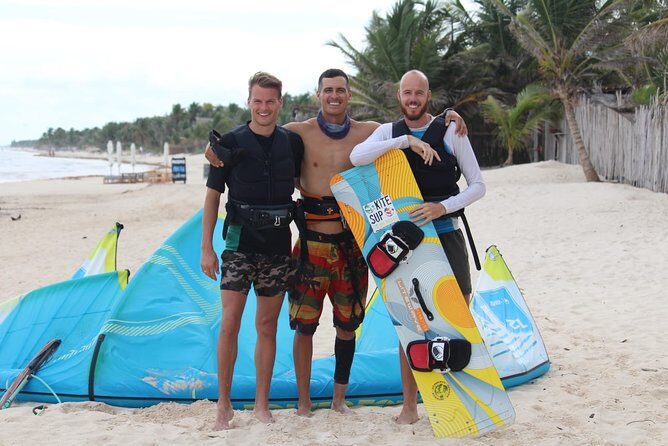
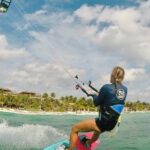
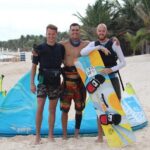
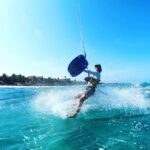
The beach portion is where this lesson earns its money. Instead of rushing straight to riding, you learn the core ideas that make the water part safer and easier.
Here’s the order you’ll follow on the sand:
- Kite and wind theory, including the wind window concept. This is how you understand where the kite needs to be above you.
- Setting up the equipment, so you know what goes where and how lines connect.
- Inner workings of the bar and safety systems, including what you’re meant to do when you need the kite to depower.
- Self-rescue technique, which gives you a realistic method to handle trouble without panic.
- Kite control, basically learning to move the kite and manage power.
I like that the safety training isn’t treated like a side lecture. You’re taught the systems and then given a physical routine to use them. That’s a big deal when the goal is to progress beyond the first frantic minutes on the water.
Into the Water: body drag upwind and power strokes
Once you’re in the water, the lesson becomes very physical and very skill-based. You’ll start with the basics that make standing and riding possible.
The water practice includes:
- Body drag upwind: learning how to work against the pull and get positioned.
- Power strokes: understanding how to generate the right pull without overcooking it.
- Waterstart with assistance, then waterstart solo.
That assist-to-solo progression is exactly what you want as a beginner. It reduces the “am I doing the right thing?” confusion, since an instructor can help you correct your timing and body position before you fully commit.
The riding drills that build real skills: downwind, upwind, transitions
After waterstart work, you’ll move into riding patterns rather than random laps. That’s how you start to build control instead of just surviving the ride.
You’ll practice:
- Ride downwind
- Ride upwind
- Transitions
Downwind helps you understand how the kite behaves as you move with the wind pull. Upwind is where technique really shows—body position, kite angle, and consistent power matter. Transitions are the bridge between “I can go” and “I can steer and change direction.”
One small expectation to set: upwind and transitions take time. Even with good instruction, they usually feel like a jump in difficulty compared with downwind. The upside is that your lesson structure breaks that difficulty into learnable steps.
Wind-first coaching in Tulum (and why El Cuyo shows up)
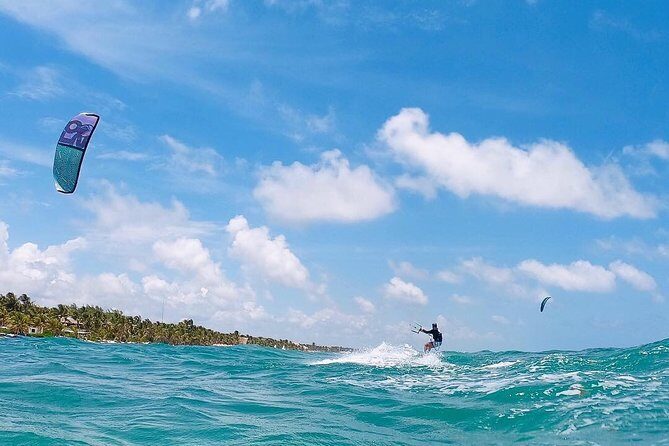
Tulum can be excellent for kiteboarding, but wind isn’t always perfect when you arrive. This is why the instructors run a wind-first approach.
You may notice your schedule shifting to chase better conditions. In at least some cases, the team has taken learners to another spot further north—El Cuyo—to get the wind they need for real practice time.
That matters for value. When conditions are right, you practice more of the skills that lead to riding (waterstarts, then actual board control). When conditions are weak, you end up doing more “kite handling” and less “board learning.”
If you can, I’d plan this lesson earlier in your trip window. Wind and scheduling won’t care about your itinerary.
A few more Tulum tours and experiences worth a look





Price and value: what $150 gets you (and what it doesn’t)
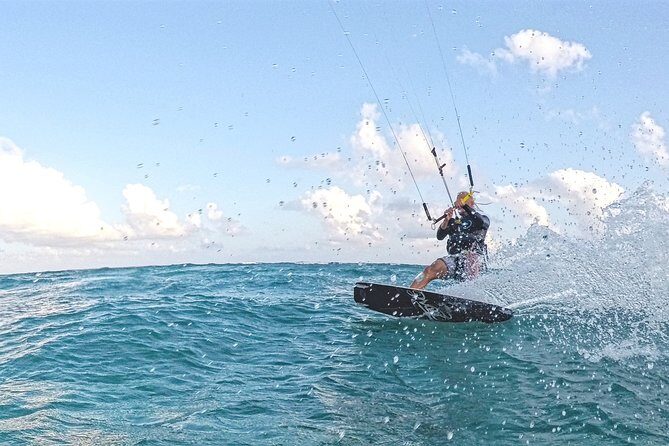
The price is $150 per person for about 3 hours. For kitesurf lessons, the cost is mostly about three things: certified coaching, the gear, and the time spent teaching safety and control.
Here’s what’s included:
- IKO certified instructor
- Kiteboarding gear
- Bathrooms and showers
- Wi-fi
- Use of paddleboarding
The inclusion list is a quiet win. Bathrooms and showers are genuinely helpful after water sessions. Wi-fi is also practical if you’re waiting on wind timing or need to re-plan.
What’s not included:
- Transportation
- Food and drinks
That means you should handle snacks and water yourself. With kiteboarding, you don’t want to be low on energy while you’re working on timing and balance.
Group format: private in feel, small in reality
There’s a line that can confuse people: it’s described as a private tour/activity but also as group kite lessons (2 customers + 1 instructor).
In plain terms: you won’t be mixed into a huge crowd. Your “group” is just the small class size for the coaching. That small ratio is why you get more chances to correct things quickly.
This format also helps with morale. Kitesurfing is humbling at first. A coach who can see what you’re doing—and correct your setup, timing, and kite control right away—makes it much less frustrating.
Coaches and teaching style: motivation plus technique
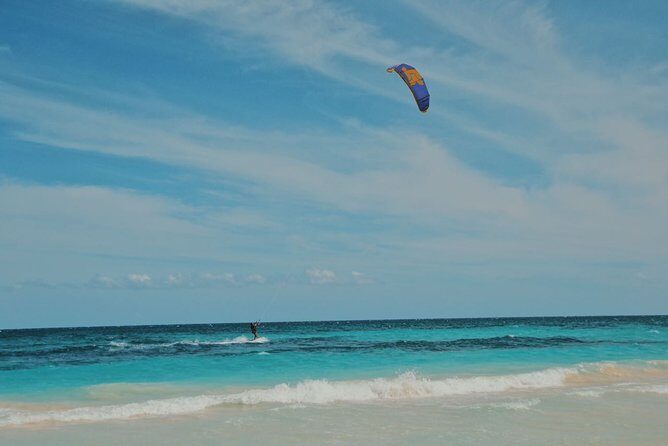
The coaching names that come up include Mauricio, Antonio, and Beau. The common thread is a mix of patience and encouragement, plus a focus on practical progress rather than chaos.
One reason this stands out: the learning goal is not just to get on the board once. The lesson sequence moves you toward control—wind theory, safety systems, self-rescue, waterstart mechanics, then riding drills like upwind and transitions.
That’s the difference between a one-off try and real skill-building.
Comfort and smart planning: wind timing, age limits, and fitness
The experience is not just “show up and go.” It comes with a few important constraints:
- Minimum age is 10 years
- Not recommended for people with back problems or serious medical conditions
- You should have moderate physical fitness
- Service animals are allowed
- It’s offered in English
- It requires good weather
Sunscreen is worth taking seriously here. One review specifically called out packing plenty of sunscreen, and honestly, they’re right.
Also, bring flexibility. If the wind isn’t right at the start, the instructors may adjust timing. Kiteboarding depends on wind, so being too rigid can waste your learning time.
Who should book this Tulum kiteboarding lesson?
You’ll get the most out of this if:
- You want a beginner-to-riding path with safety and technique
- You like structured coaching that starts on the sand
- You prefer a small group where you can get corrections fast
- You’re okay with wind-based scheduling and possible location changes
You might want to skip it (or ask first) if you have a back condition or serious medical issue, since it’s not recommended for those situations. And if you’re expecting transportation or meals to be part of the package, you’ll need to plan those separately.
Should you book Mexican Caribbean Kitesurf in Tulum?
Yes, if you want a lesson that takes safety and fundamentals seriously while still pushing toward actual riding skills like waterstarts and upwind work. The IKO-certified instruction plus the step-by-step sand-to-water structure makes the $150 price feel more like a skill investment than a one-time thrill.
Book it earlier in your trip if you can. Wind matters, and the team may shift timing to get the best conditions. If you’re ready to learn patiently, this is a solid way to turn a windy Tulum day into real kiteboarding progress.
FAQ
How many people are in the kite lesson?
It’s a small group setup with 2 customers and 1 instructor.
Is this lesson private?
It’s listed as a private tour/activity, meaning only your group participates, but the actual lesson format is still taught in that 2-students-to-1-instructor setup.
What’s the duration of the experience?
The lesson runs about 3 hours.
What’s included in the price?
You get an IKO certified instructor, kiteboarding gear, and access to bathrooms, showers, and Wi-fi. The experience also includes use of paddleboarding.
What’s not included?
Transportation and food and drinks are not included.
Where do we meet in Tulum?
You’ll start at Ahau Tulum, Carr. Tulum a Boca Paila Km. 7.5 Zona Costera, Tulum Beach, 77760 Tulum, Q.R., Mexico. The activity ends back at the meeting point.
What happens if weather conditions are poor?
The experience requires good weather. If it’s canceled due to poor weather, you’ll be offered a different date or a full refund.
More Workshops & Classes in Tulum

More Tour Reviews in Tulum
- Selva Maya Eco Adventure Park: Ziplining, Hanging Bridges, Rappelling and Cenote
★ 5.0 · 1,057 reviews